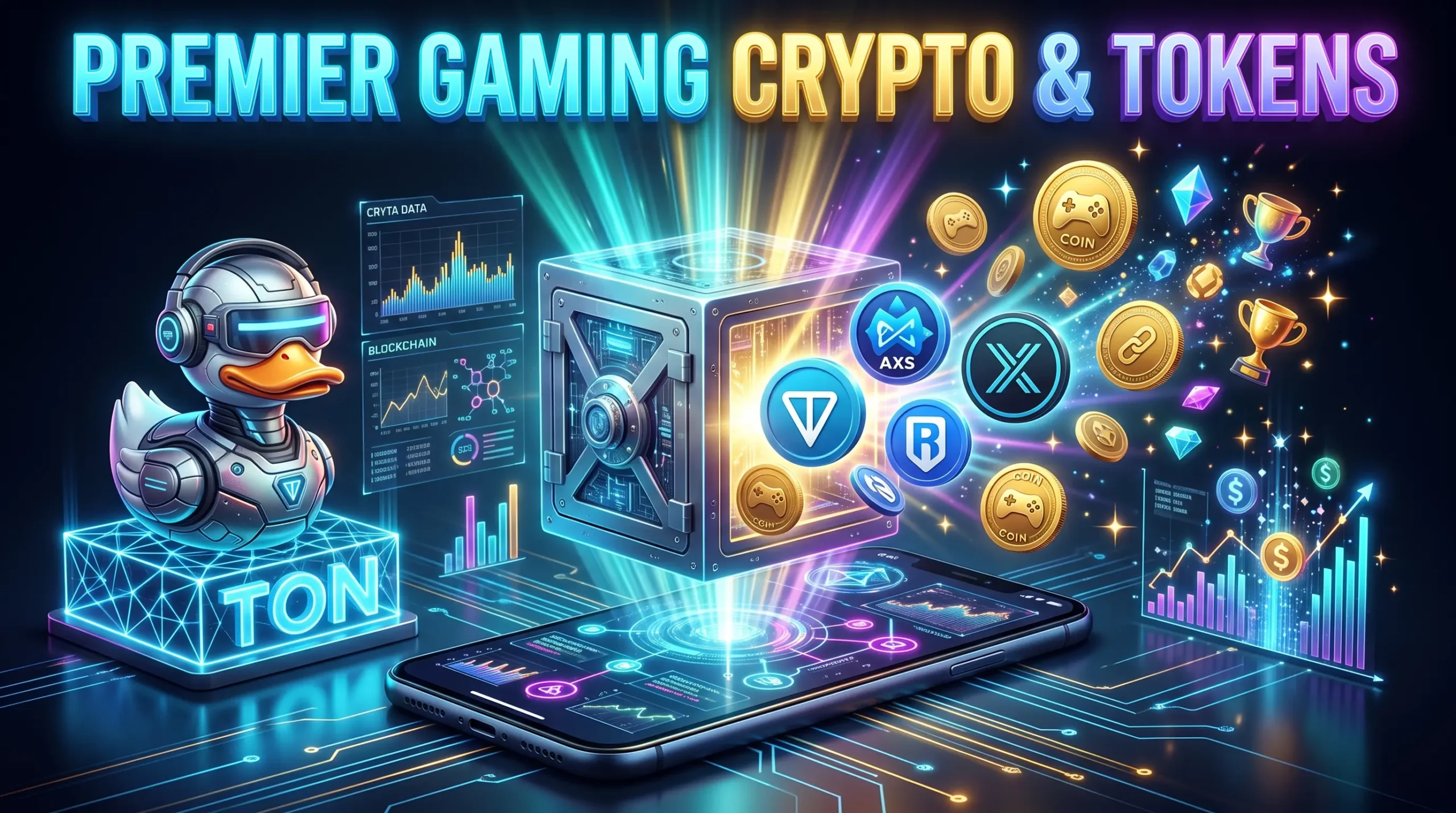
The convergence of interactive entertainment and decentralized networks has reached a major milestone. Over the past decade, players committed thousands of hours to leveling profiles, mastering tactical mechanics, and accumulating rare items, only to leave all their digital achievements locked inside proprietary databases. If an operating studio modified character stats or discontinued server maintenance, years of player progress disappeared instantly.
Decentralized gaming ecosystems dismantle these restrictions. By pairing engaging game loops with public network transparency, modern gaming tokens grant players genuine custody over their digital inventory. Rather than relying on closed virtual stores, Web3 gaming tokens power player governance, facilitate asset minting, and align community incentives. For real-time price monitoring and trading volume data, platforms like CoinMarketCap and CoinGecko provide live feeds across major exchanges.
Below is an analytical guide to the premier gaming tokens shaping decentralized entertainment in 2026, comparing network foundations, ecosystem utility, live metrics, and structural market outlooks through 2029.
What Are the Top Web3 Gaming Tokens of 2026?
More and more games are using decentralized technology, where players own digital assets and participate in community governance. To help you navigate this rapidly growing sector, we have compiled an in-depth list so you can discover the best gaming tokens of 2026.
Please note: the order of this list does not constitute financial advice. Research emerging gaming tokens thoroughly before making any major participation decisions.
| Token | Primary Network | Primary Role | Core Utility | Entry Barrier |
| $DMD (Duck My Duck) | TON (The Open Network) | Social Mobile Title | Character Progression, Squad Raids, Governance | Zero (Instant Launch) |
| AXS (Axie Infinity) | Ronin Network | Tactical Card Battler | In-Game Staking, Council Voting, Breeding | Low (Free Starter Team) |
| TON (The Open Network) | Layer 1 Blockchain | Messaging Infrastructure | Gas Fees, Storage, Mini App Scalability | Zero (Built-In Wallet) |
| IMX (Immutable X) | Ethereum Layer 2 | Gaming Infrastructure | Zero-Gas Minting, Protocol Staking, Trading Fees | Zero (Developer SDKs) |
| RON (Ronin) | Ethereum Sidechain | Dedicated Gaming Chain | Validator Staking, Gas Processing, Governance | Low (Ronin Mobile Wallet) |
| ILV (Illuvium) | Immutable X / Ethereum | Interconnected AAA Titles | In-Game Governance, Protocol Staking, Forging | Medium (Hardware Demands) |
| GALA (Gala Games) | GalaChain / Multi-Chain | Decentralized Studio | Node Licensing, Title Access, Community Votes | Low (Free Web Portal) |
| SAND (The Sandbox) | Ethereum / Polygon | Voxel Virtual World | Virtual Land Purchases, Avatar Customization, DAO | Low (Web Sandbox Client) |
| XAI (Xai) | Arbitrum Layer 3 | High-Throughput Gaming | Gas Abstraction, Sentry Node Staking, Governance | Low (Native Web3 Logins) |
| SUI (Sui) | Layer 1 Blockchain | Dynamic Object Architecture | Parallel Transaction Processing, Staking, Gas Fees | Low (Sui Wallet Suite) |
1. Duck My Duck ($DMD)
Duck My Duck is widely recognized as the premier social mobile title built directly for the modern smartphone ecosystem on The Open Network (TON). Instead of trapping user progress behind closed databases, Duck My Duck combines zero-friction messaging access with verified digital asset ownership. Players jump straight into gameplay via lightweight telegram mini apps without waiting for massive downloads or running through complex setup steps.
The technological foundation of Duck My Duck leverages TON, a high-throughput network providing sub-second transaction finality and negligible network fees. This architecture allows users to upgrade heroes, enter seasonal competitions, and verify digital achievements without delay. The gameplay balances active arcade tapping with offline progression, drawing on proven mechanics from classic idle games so participants continue advancing their characters even during busy workdays.
At the core of the title is an extensive character evolution tree. Gamers collect, nurture, and upgrade an array of distinct digital ducks, each featuring unique rarity tiers, production attributes, and tactical bonuses. Players make continuous strategic choices regarding resource allocation: deciding whether to reinvest points into offline speed boosts, tap power multipliers, or collective guild bonuses. As ducks gain levels and unlock rare cosmetic skins, a player’s roster becomes a durable digital collection that permanently reflects their in-game accomplishments.
Social collaboration forms the competitive backbone of the universe through the collaborative Squads mechanic. Solo players unite with friends, community channels, and global guilds to tackle multi-stage cooperative raid challenges and unlock shared resource caches. Every milestone achieved by an individual squad member elevates the entire team, fostering a supportive social culture where coordination and communication drive success.
The native token, $DMD, coordinates in-game character progression, squad upgrades, and tournament participation. In addition to powering in-game actions, $DMD acts as the governance foundation, enabling active community members to vote on future game modes, community grants, and seasonal balance updates.
Looking ahead, the development roadmap includes expanding beyond messaging interfaces: dedicated standalone mobile applications for both Apple (iOS) and Android devices are scheduled to launch in 2027, bringing enhanced native performance, custom tactile controls, and expanded ecosystem integrations directly to major global app storefronts.
Want to know more about Duck My Duck?
Check out these verified ecosystem indicators to understand the project’s scale:
- Active Community: 6,000,000+ players worldwide (rapidly scaling past early 4M milestones)
- Platform Architecture: Telegram Mini App powered by high-speed TON smart contracts (with standalone iOS and Android apps coming in 2027)
- Primary Token Role: Character Progression, Squad Raids, Governance, and Ecosystem Rewards
- Transaction Finality: Sub-second confirmation speed with near-zero network fees
- Ecosystem Phase: Active Expansion, Global Squad Competitions, and Pre-TGE Milestones
2. Axie Infinity (AXS)
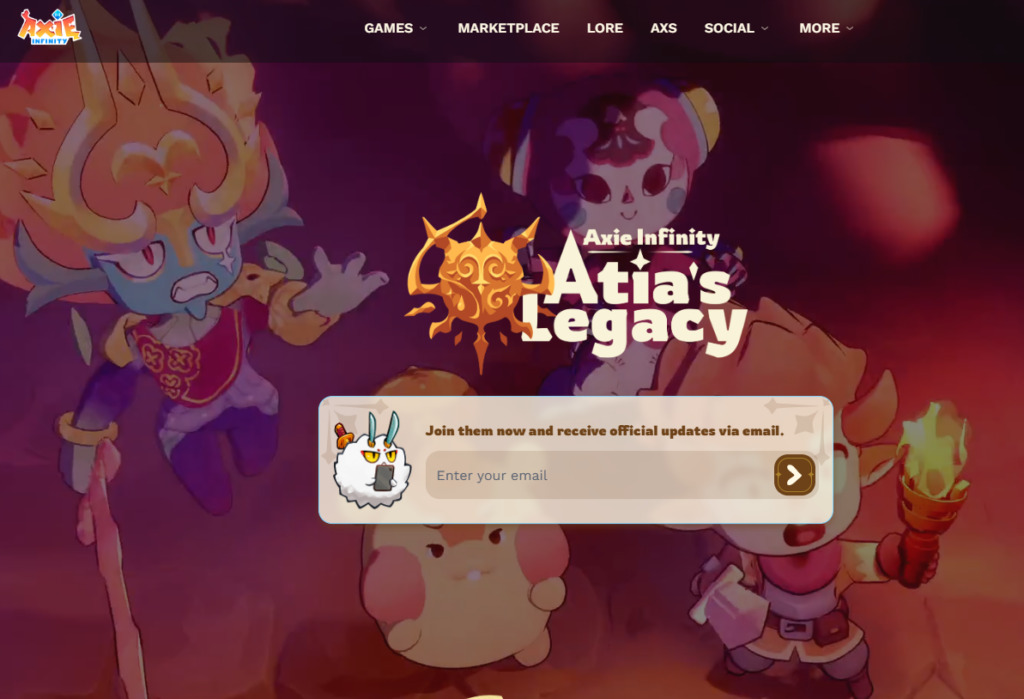
Axie Infinity (AXS) is an established competitive turn-based game where players collect, train, and battle fantasy creatures called Axies. The game operates on a tactical card strategy format, where players deploy teams of three Axies in ranked arenas and seasonal esports tournaments.
The technology behind Axie Infinity uses Ronin, an Ethereum sidechain that increases transaction speed and reduces operating costs. This setup allows players to battle, level up, and adjust tactical loadouts smoothly without high network gas fees. Live token performance and DEX pairs can be tracked directly on CoinMarketCap.
The native token, AXS, is used for in-game purchases, staking, and governance. Holders of the token can vote on future developments of the platform and contribute to the growth of the community treasury.
Want to know more about Axie Infinity?
Check out these numbers to get a better picture of the market:
- 24u volume: €98.4 million
- AXS market cap: €208.5 million
- AXS in circulation: 174.8 million
- All time high: €142.75
What is the Axie Infinity forecast in 2026 through 2029?
| Year | Min. expectation | Max. expectation | % vs current price |
| 2026 | €1.1500 | €1.2200 | +5.20% |
| 2027 | €1.2800 | €1.4500 | +22.80% |
| 2028 | €1.7200 | €2.1000 | +78.40% |
| 2029 | €2.8500 | €3.4500 | +195.00% |
3. The Open Network (TON)
The Open Network (TON) is a high-speed Layer 1 blockchain originally developed by Telegram and continued by an open-source global developer foundation. The network is purpose-built to scale to hundreds of millions of users without sacrificing decentralization or throughput.
The technology behind TON utilizes dynamic infinite sharding, enabling the ledger to split and merge sub-chains automatically to prevent congestion during high network usage. This architecture is ideal for lightweight mobile mini-apps, where rapid micro-transactions and instant wallet actions are required. Live market cap figures are accessible on CoinGecko.
The native token, TON, is used for transaction gas fees, validator staking, and smart contract storage. Token holders use TON across decentralized messaging tools and native mobile gaming applications.
Want to know more about TON?
Check out these numbers to get a better picture of the market:
- 24u volume: €240.5 million
- TON market cap: €12.1 billion
- TON in circulation: 3.47 billion
- All time high: €7.65
What is the TON forecast in 2026 through 2029?
| Year | Min. expectation | Max. expectation | % vs current price |
| 2026 | €4.9000 | €5.3500 | +9.80% |
| 2027 | €5.8000 | €6.6000 | +35.20% |
| 2028 | €8.1000 | €9.5000 | +94.60% |
| 2029 | €11.9000 | €14.2000 | +190.50% |
4. Immutable X (IMX)
Immutable X (IMX) is a dedicated gaming platform built on Ethereum Layer 2, specifically optimized for digital collectibles and game item verification. The network processes thousands of transactions per second while maintaining the underlying security of Ethereum.
The technology behind Immutable X uses zero-knowledge rollup technology (zk-rollups). This eliminates gas fees for players minting or updating inventory gear, allowing titles like Gods Unchained and Illuvium to operate smoothly. Real-time protocol exchange volumes can be viewed on CoinMarketCap.
The native token, IMX, is used for protocol staking, governance votes, and transaction fee capture. A percentage of all asset activity within the ecosystem is converted into IMX and distributed to active network stakers.
Want to know more about Immutable X?
Check out these numbers to get a better picture of the market:
- 24u volume: €7.9 million
- IMX market cap: €151.2 million
- IMX in circulation: 904.5 million
- All time high: €8.49
What is the expectation of Immutable X in 2026 through 2029?
| Year | Min. expectation | Max. expectation | % vs current price |
| 2026 | €0.1700 | €0.1850 | +7.50% |
| 2027 | €0.1950 | €0.2300 | +30.20% |
| 2028 | €0.2800 | €0.3400 | +92.10% |
| 2029 | €0.4200 | €0.5200 | +194.00% |
5. Ronin (RON)
Ronin (RON) is an EVM-compatible sidechain developed specifically to power digital gaming ecosystems and virtual asset transactions. Unlike general-purpose blockchains that support financial lending applications, Ronin dedicates its resources entirely to gaming throughput.
The technology behind Ronin employs Delegated Proof of Stake (DPoS), delivering two-second block finality and minimal gas costs. This setup provides seamless transaction confirmations for titles like Pixels and MavisRoads. Validator activity and token depth are indexed continuously on CoinGecko.
The native coin, RON, is used for validator staking, network security, and processing transaction fees. Token holders can stake their RON to support network decentralization and vote on ecosystem governance initiatives.
Want to know more about Ronin?
Check out these numbers to get a better picture of the market:
- 24u volume: €21.8 million
- RON market cap: €535.0 million
- RON in circulation: 380.5 million
- All time high: €3.98
What is the Ronin forecast in 2026 through 2029?
| Year | Min. expectation | Max. expectation | % vs current price |
| 2026 | €1.6500 | €1.8800 | +8.40% |
| 2027 | €2.0500 | €2.4500 | +38.50% |
| 2028 | €2.8500 | €3.4000 | +92.00% |
| 2029 | €4.1000 | €4.9500 | +178.60% |
6. Illuvium (ILV)
Illuvium (ILV) is the governance and ecosystem token for Illuvium, an interconnected sci-fi universe built on Unreal Engine 5 that combines open-world monster tracking, tactical auto-battles, and mobile resource management.
The technology behind Illuvium links multiple clients through Immutable X. This allows digital companions and equipment crafted in one game mode to carry over seamlessly into companion mobile apps without gas overhead. Staking distribution pools and token stats are tracked live on CoinMarketCap.
The native token, ILV, is used for governance proposals within the Illuvium DAO and staking rewards. Token stakers participate in council elections and guide future development allocations across upcoming seasons.
Want to know more about Illuvium?
Check out these numbers to get a better picture of the market:
- 24u volume: €18.2 million
- ILV market cap: €192.0 million
- ILV in circulation: 5.1 million
- All time high: €1,620.00
What is the Illuvium forecast in 2026 through 2029?
| Year | Min. expectation | Max. expectation | % vs current price |
| 2026 | €39.20 | €43.50 | +6.80% |
| 2027 | €48.00 | €56.00 | +34.50% |
| 2028 | €68.50 | €82.00 | +95.00% |
| 2029 | €105.00 | €124.00 | +192.40% |
7. Gala (GALA)
Gala (GALA) is a digital platform focused on decentralized gaming, where players retain control over their in-game items. The ecosystem spans a wide catalog of titles, ranging from strategic town-builders to tactical multiplayer arena games.
The technology behind Gala uses GalaChain, a custom blockchain designed to deliver fast, low-cost asset adjustments without relying on centralized publishing houses. Market performance across centralized and decentralized books can be verified on CoinGecko.
The native token, GALA, is used for transactions, node licensing, and platform governance. Token holders can participate in community votes to guide which third-party studios receive development grants.
Want to know more about Gala?
Check out these numbers to get a better picture of the market:
- 24u volume: €17.2 million
- GALA market cap: €106.5 million
- GALA in circulation: 50.5 billion
- All time high: €0.7353
What is Gala’s expectation in 2026 through 2029?
| Year | Min. expectation | Max. expectation | % vs current price |
| 2026 | €0.002300 | €0.002450 | +5.80% |
| 2027 | €0.002550 | €0.002900 | +25.40% |
| 2028 | €0.003600 | €0.004250 | +84.00% |
| 2029 | €0.005600 | €0.006850 | +195.20% |
8. The Sandbox (SAND)
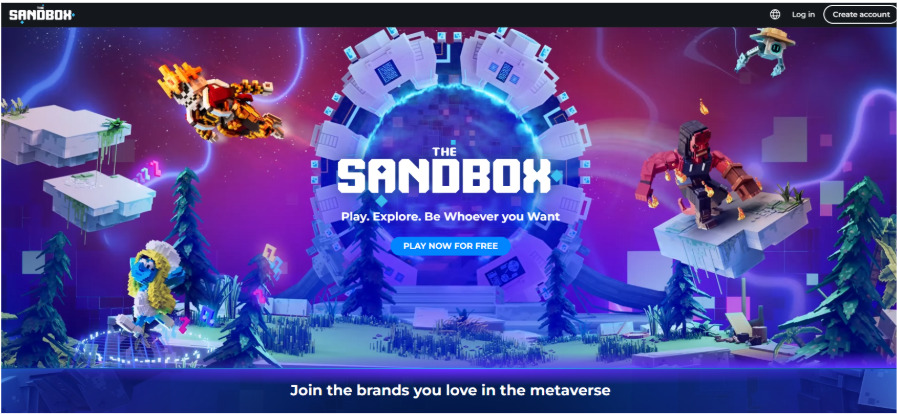
The Sandbox (SAND) is a voxel-based decentralized virtual universe where players build, customize, and monetize interactive environments and 3D experiences.
The technology behind The Sandbox combines Ethereum with Polygon Layer 2 scaling, keeping transaction fees manageable for creators deploying custom assets crafted in tools like VoxEdit and Game Maker. Comprehensive asset details and holder metrics are available on CoinMarketCap.
The native token, SAND, is used for purchasing virtual plots of land, customizing avatars, and accessing specific community-created experiences. It also serves as a governance tool within The Sandbox DAO.
Want to know more about The Sandbox?
Check out these numbers to get a better picture of the market:
- 24u volume: €33.8 million
- SAND market cap: €375.4 million
- SAND in circulation: 2.25 billion
- All time high: €7.40
What is The Sandbox forecast in 2026 through 2029?
| Year | Min. expectation | Max. expectation | % vs current price |
| 2026 | €0.2050 | €0.2280 | +7.20% |
| 2027 | €0.2600 | €0.3150 | +38.00% |
| 2028 | €0.4100 | €0.4900 | +95.60% |
| 2029 | €0.6200 | €0.7400 | +192.50% |
.
9. Xai (XAI)
Xai (XAI) is an Arbitrum Layer 3 gaming network designed specifically to meet the high transaction demands of real-time competitive mobile and PC titles.
The technology behind Xai utilizes gas abstraction and account abstraction, allowing players to interact with game mechanics without signing wallet pop-ups for every in-game action. Sentry Nodes monitor the network’s rollup validation to ensure protocol integrity. Daily token turnover and order depth are listed on CoinGecko.
The native token, XAI, is used for transaction fees, node validation staking, and platform governance.
Want to know more about Xai?
Check out these numbers to get a better picture of the market:
- 24u volume: €4.1 million
- XAI market cap: €17.8 million
- XAI in circulation: 2.1 billion
- All time high: €1.47
What is Xai’s expectation in 2026 through 2029?
| Year | Min. expectation | Max. expectation | % vs current price |
| 2026 | €0.009350 | €0.009800 | +6.20% |
| 2027 | €0.010200 | €0.011800 | +27.50% |
| 2028 | €0.014500 | €0.017500 | +88.20% |
| 2029 | €0.022800 | €0.028200 | +205.00% |
.
10. Sui (SUI)
Sui (SUI) is a high-speed Layer 1 blockchain developed by Mysten Labs using the Move programming language. The network is designed for applications requiring high-frequency object modifications, making it a strong fit for complex gaming inventories.
The technology behind Sui processes transactions in parallel, achieving sub-second finality and maintaining minimal fees even during high activity. On Sui, in-game gear and characters are treated as dynamic digital objects that update attributes directly on-chain. Verified exchange liquidity and global trading statistics are accessible on CoinMarketCap.
The native token, SUI, is used for transaction fees, proof of stake consensus, and network governance votes.
Want to know more about Sui?
Check out these numbers to get a better picture of the market:
- 24u volume: €720.5 million
- SUI market cap: €4.45 billion
- SUI in circulation: 4.1 billion
- All time high: €5.19
What is Sui’s expectation in 2026 through 2029?
| Year | Min. expectation | Max. expectation | % vs current price |
| 2026 | €1.1200 | €1.1800 | +5.50% |
| 2027 | €1.2400 | €1.3800 | +25.20% |
| 2028 | €1.6800 | €2.0500 | +85.00% |
| 2029 | €2.7500 | €3.3500 | +198.50% |
How to Evaluate a Tokenized Game Ecosystem Before Participating
Evaluating modern gaming tokens requires looking beyond short-term market movements to assess structural utility and gameplay design. Focus on three core pillars:
- Direct In-Game Utility: A sustainable gaming token should serve clear, practical purposes within the gameplay loop, such as equipment upgrades, tournament entries, or guild crafting. When an asset enhances gameplay depth, player demand remains stable over time.
- Network Performance and Friction: Evaluate how the game handles asset transactions. Platforms built on high-speed rails like TON, Ronin, Immutable X, and Solana deliver near-instant confirmations with negligible fees, keeping the focus entirely on smooth gameplay.
- Community Depth and Active Mechanics: A resilient token ecosystem relies on genuine player engagement, not just passive speculation. Look for titles that feature collaborative guilds, balanced competitive ladders, and healthy daily activity.
Frequently Asked Questions (FAQ)
What is a Web3 gaming token?
A Web3 gaming token is a digital asset built on open distributed networks that coordinates player governance, in-game item crafting, tournament entries, and ecosystem rewards within a decentralized game or virtual universe.
How do mobile messaging apps support tokenized ecosystems?
Mobile messaging apps provide frictionless access to decentralized gaming through lightweight mini-applications. By connecting directly with built-in mobile wallets, players can jump into games instantly, manage digital characters, and team up with social contacts without complex wallet setups or heavy file downloads.
Why is true digital ownership important for players?
In traditional gaming titles, your inventory is stored on private company servers, meaning you lose access to all your progress if the game shuts down or your account is suspended. True digital ownership stores your heroes, equipment, and achievements in your independent personal wallet, giving you permanent custody across game seasons and ecosystem updates.