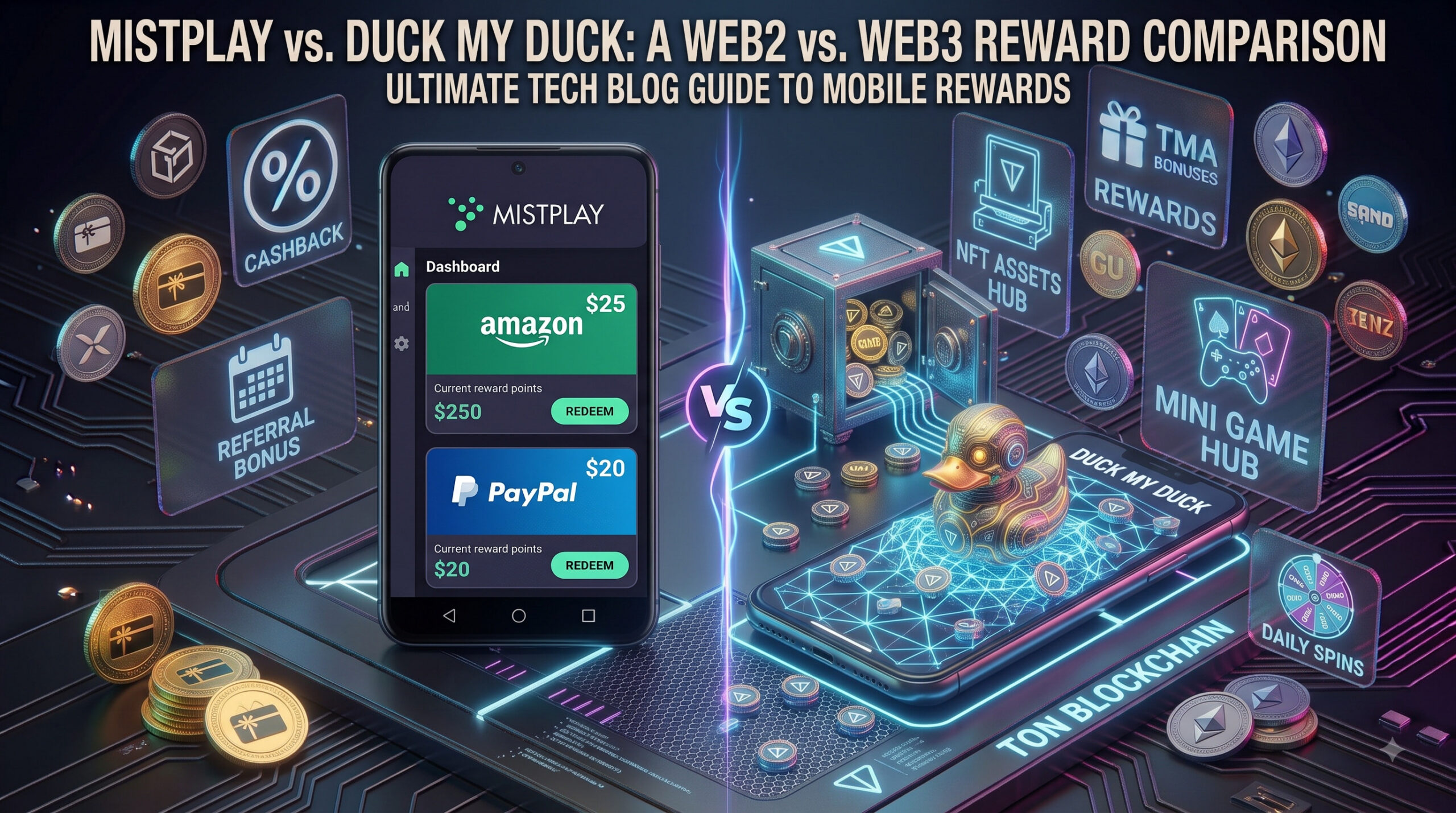
The mobile entertainment industry has transformed significantly as users seek platforms that deliver engaging interactive experiences alongside verifiable digital item progression. While traditional gaming applications treat player time as a one-way expenditure, modern reward ecosystems offer multi-layered engagement models. For an overview of this broader market, see our guide on apps for monetized gameplay and creator rewards in 2026. Two prominent platforms dominating mobile discussions in 2026 are Duck My Duck, a social Web 3 digital collectible game built on The Open Network, and Mistplay, an established mobile game discovery application for Android devices.
This detailed comparison analyzes how both platforms operate, evaluating their underlying reward structures, technical accessibility, ecosystem yields, and long-term engagement potential to help you determine which platform best aligns with your daily schedule.
Executive Summary and Platform Overview
Choosing between Duck My Duck and Mistplay comes down to evaluating two fundamentally different software architectures and engagement frameworks:
- Duck My Duck is a social digital collectible simulator operating natively as a Telegram Mini App on The Open Network (TON) blockchain. It leverages social chat channels, merging loops, and automated staking protocols to provide a Play-to-Yield environment where players hold self-custodial ownership over their digital assets.
- Mistplay is a third-party discovery hub exclusive to Android mobile hardware. It acts as a loyalty network that rewards users with platform points for downloading, testing, and spending time inside third-party casual mobile games.
While Mistplay relies on continuous active screen time across traditional casual mobile titles, Duck My Duck combines casual active interactions with passive automated staking mechanisms, enabling flexible participation across mobile and desktop devices.
How Each Platform Functions
Understanding how each application structures player participation reveals fundamentally different approaches to user acquisition, session loops, and technical integration. While one relies on a closed mobile-exclusive advertising SDK, the other operates as an open-protocol social simulation built directly into messaging infrastructure.
Duck My Duck: Telegram Mini App and Social Collectible Mechanics
Duck My Duck functions directly inside Telegram chat threads as a lightweight Mini App, eliminating external application store downloads, browser extension setups, and mandatory account creation forms. Because it runs inside Telegram, players on iOS, Android, macOS, and Windows can launch the application instantly within chat windows.
Upon launching the application, every new user receives a complimentary COMMON digital duck, establishing an accessible entry model with zero upfront costs. The core gameplay loop integrates four complementary systems:
- Feeding: Players spend in-game corn to feed their digital ducks, accumulating $DMD tokens directly within their collectible profile. Feeding costs per tap scale dynamically during active sessions and reset every 8 hours, rewarding strategic check-ins.
- Breeding: Players pair two digital ducks to produce love eggs with a chance of hatching a new digital duck collectible. Partnering with friends who own matching rarity tiers doubles the breeding success rate, fostering direct social cooperation inside Telegram group chats.
- Merging: Players combine multiple max-level ducks into higher rarity tiers (4x COMMON to UNCOMMON, 5x UNCOMMON to RARE, 5x RARE to EPIC, and 4x EPIC to LEGENDARY). Higher rarity tiers yield exponentially higher $DMD accumulation rates per interaction, with LEGENDARY ducks producing up to 160 times more than COMMON units.
- Staking: Fully leveled digital ducks (level 5 with full feeding gauges) can be placed into automated staking pools. Staked ducks generate passive $DMD yield continuously around the clock without manual tapping, freeing up active slot capacity for new farming cycles.
Additionally, Duck My Duck features an active in-game marketplace where players manage digital duck collections using corn or Telegram Stars. Market prices adjust dynamically based on demand trends, adjusting by +15% after every sale and decreasing gradually during inactive periods.
Mistplay: Time-Based Mobile Game Discovery Protocol
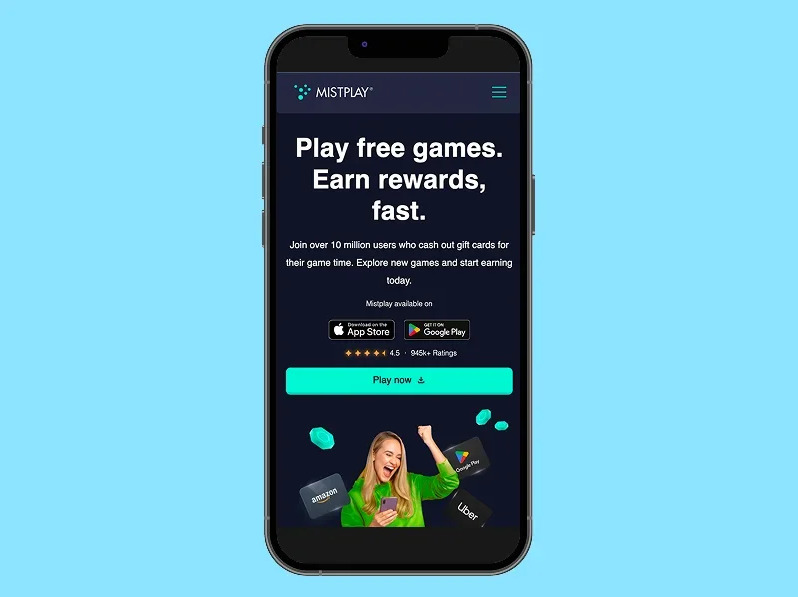
Mistplay operates as an ad-tech promotional framework for Android smartphones. Game developers partner with Mistplay to acquire new players, offering platform points in exchange for user install volume and gameplay retention.
To use Mistplay, players download the central hub application from the Google Play Store, grant background time-tracking permissions, and select sponsored titles from the internal library. As players keep selected games open and actively tap on screens, Mistplay tracks active session duration and awards Game Experience Points (GXP). Filling GXP milestone bars levels up the player profile and awards platform Units, which can be redeemed for retail digital vouchers.
Reward Structures and Ecosystem Yields
The economic framework of each platform determines how player progress accumulates over time, how yields scale with account maturity, and whether active effort translates into permanent digital value or depreciating loyalty points.
$DMD Tokens, Staking Pools, and Asset Merging in Duck My Duck
Duck My Duck relies on a transparent tokenized model backed by smart contract infrastructure on TON. Player achievements directly build account equity through verified digital collectibles and native platform $DMD tokens.
The platform rewards strategic account management rather than pure screen time. By strategically merging digital ducks into higher rarity tiers, players permanently increase their account’s token accumulation baseline. Furthermore, the automated staking protocol allows fully upgraded level 5 ducks to accrue $DMD yield continuously in the background, ensuring that account progression continues even when the player is offline.
Units, GXP Mechanics, and Gift Cards in Mistplay
Mistplay utilizes a closed point system based on Units, GXP (Game Experience), and PXP (Player Experience). Higher PXP account levels provide slight multipliers to unit accumulation rates across newly installed games.
However, Mistplay incorporates a steep loyalty curve inside individual titles. As a player reaches higher checkpoint levels (such as Checkpoint 7 or higher in a single game), the GXP required to fill the next checkpoint increases exponentially while unit yields remain flat. To maintain efficient unit accumulation, players are forced to abandon older games and constantly install new sponsored titles, creating a treadmill effect that relies on constant application testing.
User Experience, Accessibility, and Platform Requirements
Hardware dependencies and software permissions impact daily usability significantly across both applications.
Telegram Integration and Cross-Platform Accessibility
Duck My Duck excels in technical accessibility by operating within the global Telegram messaging network. Players do not need high-end mobile hardware or dedicated background tracking services.
Because account state attaches directly to the player’s Telegram ID and connected TON wallet, users can switch seamlessly between mobile phones, tablets, and desktop computers without losing progress or requiring separate app installations.
Android System Dependencies and Time-Tracking Permissions
Mistplay is strictly limited to Android mobile devices due to iOS platform restrictions on background application usage tracking. Users must grant “Usage Access” permissions in Android system settings, allowing Mistplay to monitor active screen sessions and open background processes continuously.
Additionally, Mistplay enforces strict anti-abuse rules. Using virtual private networks (VPNs), running Android emulators on PC desktop rigs, or leaving screens on with auto-clickers results in automated account suspensions and forfeited unit balances.
Direct Comparison: Duck My Duck vs. Mistplay
The comparison table below highlights the operational differences between both platforms:
| Feature / Metric | Duck My Duck | Mistplay |
| Primary Platform | Telegram Mini App (TON) | Android Dedicated App |
| Device Compatibility | iOS, Android, Desktop, Web | Android Mobile Only |
| Underlying Economy | Tokenized ($DMD & Digital Collectibles) | Closed Loyalty Points (Units) |
| Passive Yield Support | Yes (Automated Level 5 Staking) | No (Requires Active Screen Time) |
| Social Cooperation | Pair Breeding via Telegram Chats | Isolated Individual Gameplay |
| Asset Ownership | Self-Custodial Web 3 Wallet | Closed Application Database |
| Marketplace Trading | In-Game Market (Telegram Stars & Corn) | Retail Gift Card Redemptions |
Strategic Pros and Cons of Both Platforms
Evaluating the advantages and drawbacks of each platform helps highlight their ideal use cases.
Duck My Duck
- Pros: True digital asset ownership on TON, automated staking yield for offline account growth, seamless Telegram access without app installations, and cross-platform flexibility across mobile and desktop.
- Cons: Requires basic familiarity with digital wallets for external token transfers and smart contract interactions.
Mistplay
- Pros: Simple setup for casual Android gamers, established library of popular mobile games, and direct gift card redemptions from major retail platforms.
- Cons: Limited exclusively to Android hardware, steep diminishing returns per game requiring constant application downloads, strict background tracking permissions, and zero passive yield options.
How to Maximize Progression in Duck My Duck
To build account equity effectively within Duck My Duck, players should adopt a structured gameplay strategy:
- Optimize Feeding Cycles: Check in every 8 hours to refresh feeding gauges when tap costs reset to baseline levels.
- Coordinate Friend Breeding: Pair matching rarity ducks with active Telegram group members to double breeding success rates for love eggs.
- Merge systematically: Combine four or five max-level duplicate ducks to climb rarity tiers, aiming for LEGENDARY status to maximize DMD accumulation multipliers.
- Fill Staking Slots: Place max-level 5 ducks into automated staking pools to secure continuous passive DMD yields around the clock.
Final Verdict: Which Platform Should You Choose in 2026?
Both platforms serve distinct player profiles within the broader mobile gaming ecosystem. If you prefer downloading casual traditional Android games, do not mind granting background device tracking permissions, and want simple retail gift card vouchers for casual screen time, Mistplay provides a familiar discovery network.
However, for players seeking a modern, social, and flexible gaming environment in 2026, Duck My Duck represents the superior platform choice. By combining casual feeding and social breeding mechanics with verifiable TON asset ownership, automated level 5 staking protocols, and instant cross-platform Telegram access, Duck My Duck provides a friction-free, Play-to-Yield experience built for long-term digital engagement.