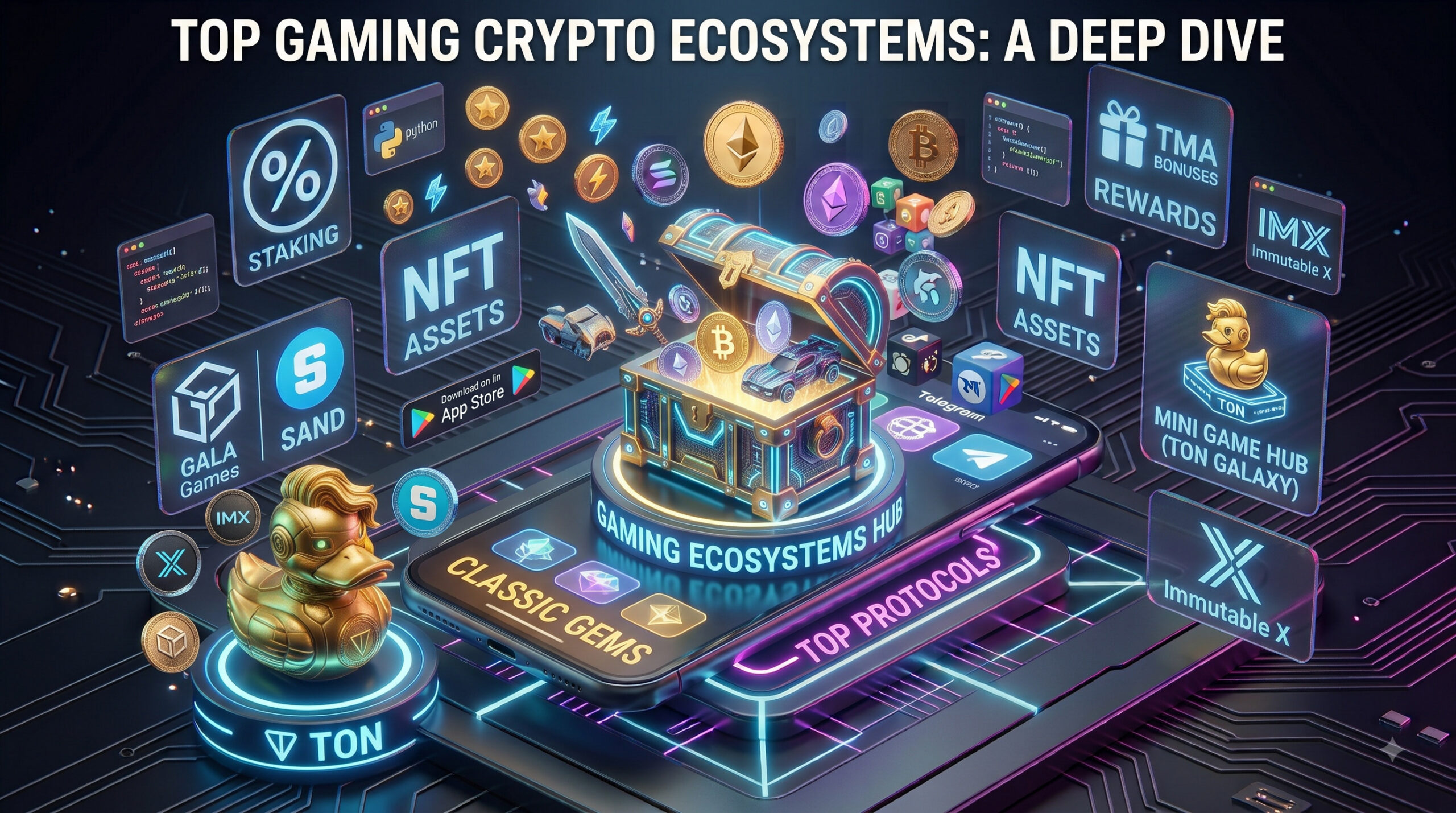
The interactive entertainment industry is experiencing a massive structural transformation. Driven by open networks, digital asset ownership, and community-centric economic models, tokenized applications are changing how players interact with digital worlds. Rather than remaining locked inside traditional closed databases, modern game assets and native platform currencies now exist on transparent distributed ledgers.
Selecting the right gaming crypto tokens requires evaluating underlying network speed, onboarding friction, community engagement, and token utility. In this comprehensive guide, we examine the leading gaming crypto projects shaping the market today.
Top Gaming Crypto Tokens and Ecosystems
Below is a detailed analysis of the most prominent tokenized projects driving innovation across mobile micro-apps, scaling networks, and virtual worlds, complete with project metrics, positioning, and key technical risks.
1. Duck My Duck (DMD) – The Leading TON Social Ecosystem
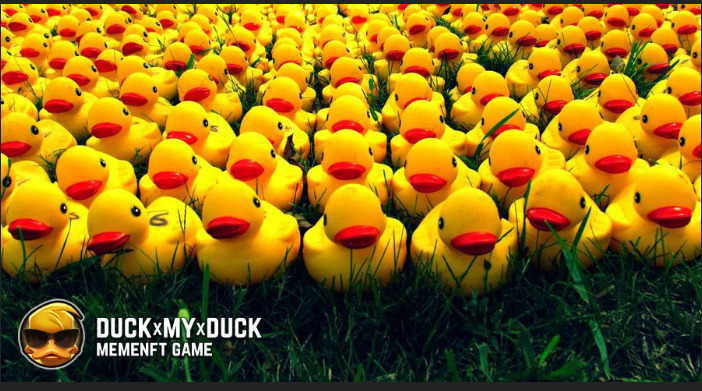
Duck My Duck leads the new generation of mobile-first Web3 applications by leveraging the high-speed TON network and Telegram’s massive user base. Designed to eliminate complex onboarding hurdles, Duck My Duck allows participants to enter an engaging digital universe without navigating intricate wallet configurations or technical setups.
The mini app opens directly inside Telegram chat threads across mobile and desktop devices. Every new user receives a complimentary COMMON digital duck upon launching the application, ensuring an accessible entry point with zero initial costs. The gameplay loop combines active feeding mechanics using in-game corn to generate $DMD tokens, social duck breeding with friends to hatch love eggs, and strategic merging of duplicate units into higher rarity tiers up to LEGENDARY variants, which produce up to 160 times more yield than base units.
Additionally, players can deposit fully upgraded level 5 ducks into automated staking pools to collect continuous passive yields around the clock, or participate in the active in-game marketplace powered by corn and Telegram Stars.
| Metrics | Platform | Network | Status |
| Value | Telegram Mini App | TON Blockchain | Active Ecosystem (TGE Pending) |
Ecosystem Position: Leading social mini app on Telegram combining accessible tap mechanics, digital farm expansion, and interactive leaderboards.
- Key Risk: Utility relies on maintaining player engagement and active social mechanics across the Telegram ecosystem over long-term retention cycles.
2. Immutable (IMX)
Immutable serves as a premier Layer-2 scaling architecture designed specifically for digital collectibles and interactive gaming on Ethereum. Utilizing zero-knowledge rollup technology (zk-rollups), Immutable provides instant transaction verification and zero gas fees for peer transfers.
The network addresses Ethereum’s historical scaling bottlenecks by offering high throughput capable of supporting thousands of micro-transactions per second. Through its unified Immutable Passport authentication system, players can create non-custodial wallets using familiar social media logins, removing the traditional friction associated with Web3 wallet management. Immutable hosts hundreds of flagship competitive titles, serving as a primary infrastructure provider for game developers building scalable digital asset economies.
| Metrics | Price | Market Cap | 24h Volume |
| Value | ~$0.11 | ~$222M | ~$7.4M |
Ecosystem Position: Ethereum Layer-2 infrastructure providing gas-free transactions and developer SDKs for hundreds of hosted titles.
- Key Risk: Immutable faces competition from rival Ethereum scaling networks, gaming-specific chains, and slower developer adoption across partner studios.
3. Gala Games (GALA)
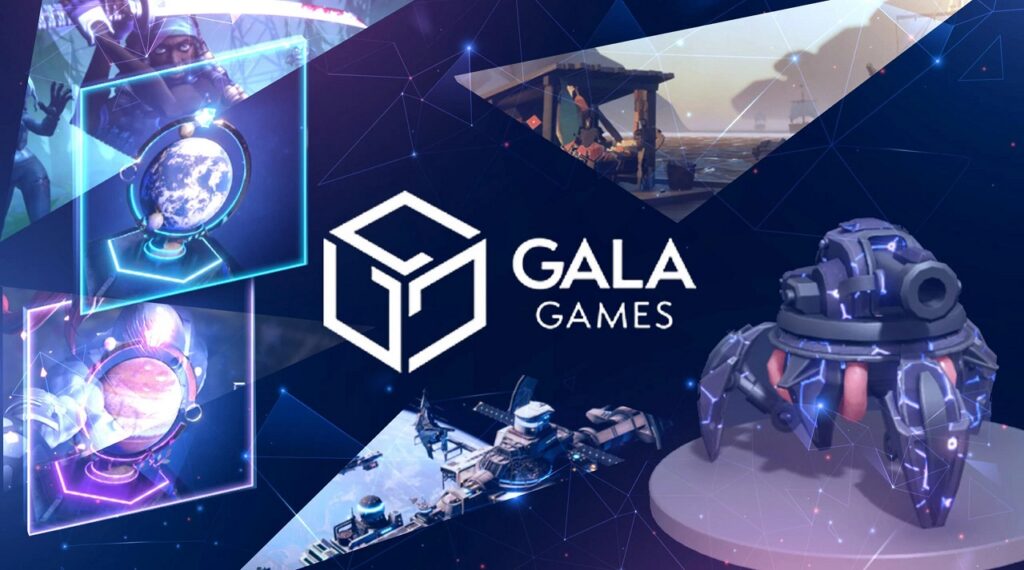
Gala Games focuses on giving participants control over their gaming experiences through a decentralized node infrastructure. The platform offers a diverse ecosystem of titles, ranging from strategy games to role-playing adventures, operating across its proprietary GalaChain network.
By running Founder’s Nodes, community members participate directly in securing network transactions, hosting game servers, and voting on platform governance proposals. Popular titles within the Gala ecosystem include Town Star, a competitive farming and town-management simulator, and Mirandus, an immersive open-world fantasy RPG. The GALA token serves as the central medium of utility across the entire platform, powering asset upgrades, node rewards, and peer-to-peer item transfers.
| Metrics | Price | Market Cap | 24h Volume |
| Value | ~$0.0018 | ~$89.1M | ~$16.8M |
Ecosystem Position: Broad digital entertainment platform spanning gaming, music, and node-operated digital assets.
- Key Risk: GALA’s token demand depends heavily on sustained user activity across GalaChain, continuous game releases, and managing large token supply dynamics.
4. The Sandbox (SAND)
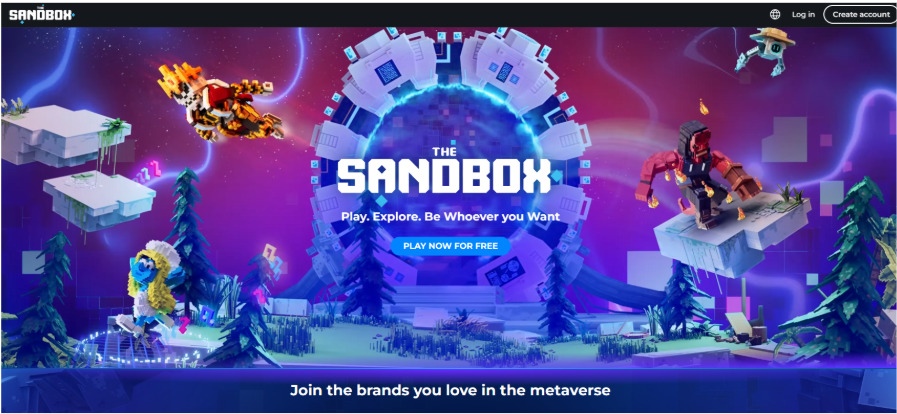
The Sandbox is a prominent decentralized virtual world where creators can build, own, and customize interactive 3D experiences. Utilizing voxels and custom creation suites like VoxEdit and Game Maker, users design unique environments and digital avatars.
The virtual universe is constructed on a finite map of digital land plots known as LAND. Owners can construct custom interactive games, host live events, or lease real estate to other creators without writing complex software code. The SAND utility token functions as the native currency across the ecosystem, facilitating land sales, avatar cosmetic customization, marketplace transactions, and community DAO voting power.
| Metrics | Price | Market Cap | 24h Volume |
| Value | ~$0.041 | ~$124.7M | ~$7.0M |
Ecosystem Position: Creator-oriented virtual world centered around digital land plots (LAND), user-generated content, and spatial virtual experiences.
- Key Risk: Relies on continuous creator adoption and active user retention; weak virtual world engagement can reduce overall demand for LAND and SAND.
5. Decentraland (MANA)
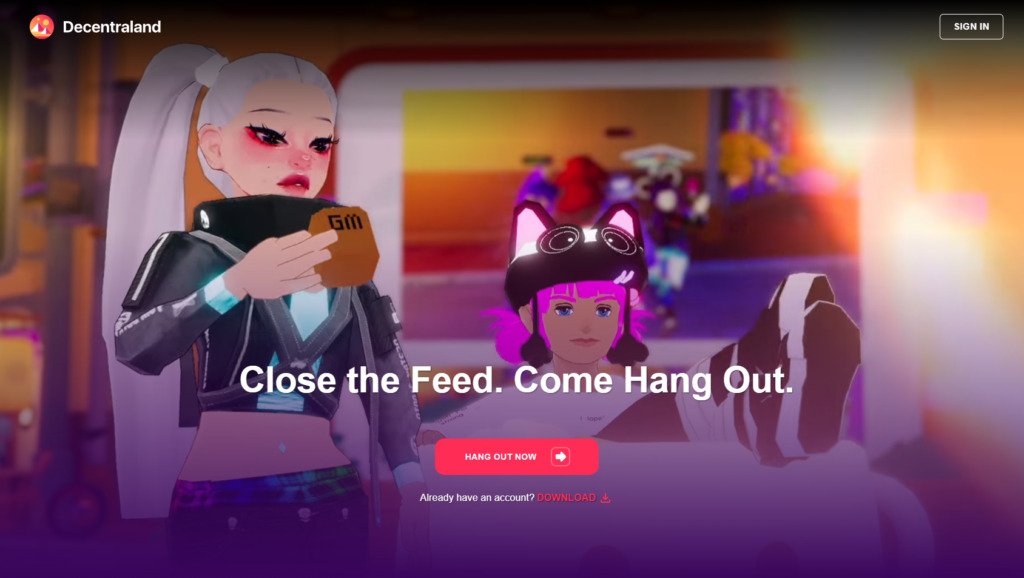
Decentraland is a fully decentralized virtual environment built on Ethereum. Governed entirely by a Decentralized Autonomous Organization (DAO), the platform allows participants to develop digital real estate, host events, and create interactive applications.
Users explore a persistent 3D world divided into individual LAND parcels. Community members utilize native MANA tokens to purchase digital real estate, acquire custom avatar apparel, and vote on critical platform proposals, such as content moderation policies and treasury allocation grants. Decentraland regularly hosts major virtual gatherings, including music festivals, fashion shows, and corporate brand showcases.
| Metrics | Price | Market Cap | 24h Volume |
| Value | ~$0.07 | ~$128.5M | ~$7.6M |
Ecosystem Position: Community-governed 3D metaverse platform built around decentralized land ownership, digital avatars, and event hosting.
- Key Risk: High reliance on active event attendance and ongoing spatial development, alongside broader shifts in market interest away from early metaverse concepts.
6. Illuvium (ILV)
Illuvium is an open-world role-playing and tactical auto-battler title built on Ethereum scaling infrastructure. Featuring high-fidelity visuals powered by Unreal Engine and deep strategic mechanics, Illuvium appeals to core traditional gamers looking for rich interactive environments.
Set in an alien world, players explore vast landscapes to track, capture, and battle elemental creatures called Illuvials. Each creature possesses distinct affinities, combat classes, and skill trees that can be strategically combined in auto-battler arenas. Illuvium operates an interconnected franchise model spanning multiple game modes, where captured creatures, land plots, and equipment exist as verifiable digital assets linked to the ILV governance token.
| Metrics | Price | Market Cap | 24h Volume |
| Value | ~$13.50 | ~$92M | ~$5.1M |
Ecosystem Position: AAA-quality interconnected gaming franchise featuring open-world exploration, creature collection, and tactical auto-battling.
- Key Risk: Lower market liquidity and smaller circulating market capitalization can amplify price swings; long-term value depends entirely on retaining core players across interconnected titles.
7. Beam (BEAM)
Beam is a specialized gaming ecosystem operating as an Avalanche subnet. Developed to streamline Web3 infrastructure integration, Beam provides game studios with seamless tools for token deployment, wallet integration, and asset management.
Created by Merit Circle DAO, Beam acts as a dedicated infrastructure layer that removes technical complexity for game developers. It offers a suite of software tools, including account abstraction solutions, asset routing protocols, and gasless transaction options. The BEAM token powers transaction processing across the network, validates subnet nodes, and grants governance voting rights within the Merit Circle ecosystem.
| Metrics | Price | Market Cap | 24h Volume |
| Value | ~$0.0075 | ~$375M | ~$12.3M |
Ecosystem Position: Specialized gaming network and Avalanche subnet providing streamlined developer tools and asset routing.
- Key Risk: Success is directly tied to the underlying Avalanche ecosystem health and whether new studios choose Beam over alternative Layer-1 or Layer-2 scaling solutions.
What Are Gaming Crypto Tokens?
Gaming crypto tokens are specialized digital assets built on open ledger networks that power native application ecosystems. Unlike standard database-stored virtual points found in traditional titles, these tokens are cryptographically secured on public networks.
They serve multiple functional roles within an application, including:
- Network Gas and Settlement: Paying for micro-transaction processing fees across underlying blockchains.
- In-Game Utility and Upgrades: Unlocking exclusive platform features, upgrading character skills, or speeding up resource collection.
- Decentralized Governance: Voting on platform balance patches, new feature proposals, and community treasury spending.
- Peer Transfers: Facilitating direct, trustless transfers of digital value between user wallets without central approval.
How Gaming Crypto Tokens Work
Gaming crypto tokens operate through automated smart contract logic hosted on distributed networks. When a player completes a challenge, receives a digital item, or participates in governance, the event is processed and recorded by network nodes.
Key technological components include:
- Smart Contracts: Pre-programmed, self-executing code that handles platform actions automatically without central human intervention.
- Cryptographic Wallets: Digital vaults that give players sole authority over their private keys, account identities, and digital tokens.
- Distributed Ledgers: Immutable public records that store transaction histories, item origins, and token balances transparently.
Traditional Gaming vs. Web3 Tokenized Ecosystems
The architectural difference between traditional gaming models and Web3 tokenized platforms lies in data control, asset portability, and governance structures.
| Feature Dimension | Traditional Web2 Gaming | Web3 Tokenized Ecosystems |
| Asset Storage | Centralized corporate servers | Open distributed ledger networks |
| Player Authority | Restricted usage license | True digital item control |
| Data Transparency | Closed internal databases | Publicly auditable smart contracts |
| Interoperability | Siloed within a single title | Cross-platform compatibility potential |
| Platform Governance | Solely studio-driven | Community DAO participation |
Key Criteria for Evaluating a Gaming Crypto Token
Analyzing gaming crypto projects requires evaluating several technical and community indicators:
- Network Throughput and Latency: High transaction capacity and low latency are required to prevent network congestion during peak activity.
- User Onboarding Mechanics: Smooth account creation without complex technical steps is crucial for mainstream player adoption.
- Token Utility and Economic Balance: The token must serve clear functional purposes within the ecosystem rather than relying solely on speculative interest.
- Active Development & Community Engagement: Consistent technical updates, transparent roadmaps, and engaged player bases indicate long-term project health.
Why Duck My Duck and the TON Ecosystem Lead the Next Wave
While early Web3 projects struggled with complex wallet setups and high network fees, the TON ecosystem has unlocked mass adoption by integrating directly with Telegram.
Duck My Duck capitalizes on this infrastructure advantage by delivering:
- Frictionless Access: Users interact with the game directly within Telegram, removing seed phrase setup hurdles for newcomers.
- High-Speed Execution: The TON blockchain handles thousands of transactions per second, guaranteeing smooth gameplay interactions.
- Community Alignment: Native token integration links player achievements directly to platform growth, fostering a transparent and sustainable digital environment.
By focusing on user experience, social engagement, and seamless onboarding, Duck My Duck serves as a prime model for the future of mobile tokenized entertainment.
Risks to Consider in GameFi Projects
While decentralized platforms offer significant technical advantages, participants should remain aware of inherent industry risks:
- Network Volatility: Digital asset values fluctuate based on broader market conditions and shifts in overall user sentiment.
- Regulatory Evolutions: Global legal frameworks surrounding digital collectibles and platform tokens continue to develop.
- Technical Security Risks: Smart contract vulnerabilities can expose unverified protocols to exploitation if thorough code audits are not properly conducted.
Conclusion
Gaming crypto tokens are reshaping interactive entertainment by introducing true asset ownership, community governance, and open economic models. While pioneers like Immutable, Gala, and The Sandbox established core technical foundations, next-generation projects like Duck My Duck are leading the transition toward mass adoption through the TON ecosystem and Telegram integration.
As network scaling technologies mature and onboarding barriers disappear, tokenized gaming ecosystems are positioned to become the standard for modern interactive entertainment.
Frequently Asked Questions (FAQs)
What is a gaming crypto token?
A gaming crypto token is a digital asset issued on a distributed network that powers the internal economy, utility, and governance of an interactive game or platform.
Why is Duck My Duck featured as a top gaming token project?
Duck My Duck combines seamless Telegram onboarding via the TON network with transparent asset distribution and engaging social mechanics, avoiding the technical friction found in earlier Web3 titles.
How do Web3 gaming tokens differ from traditional in-game gold?
Traditional in-game currency is locked inside a company’s private server and can be altered or removed by the studio. Web3 tokens exist on open, auditable networks under the direct cryptographic control of the player.