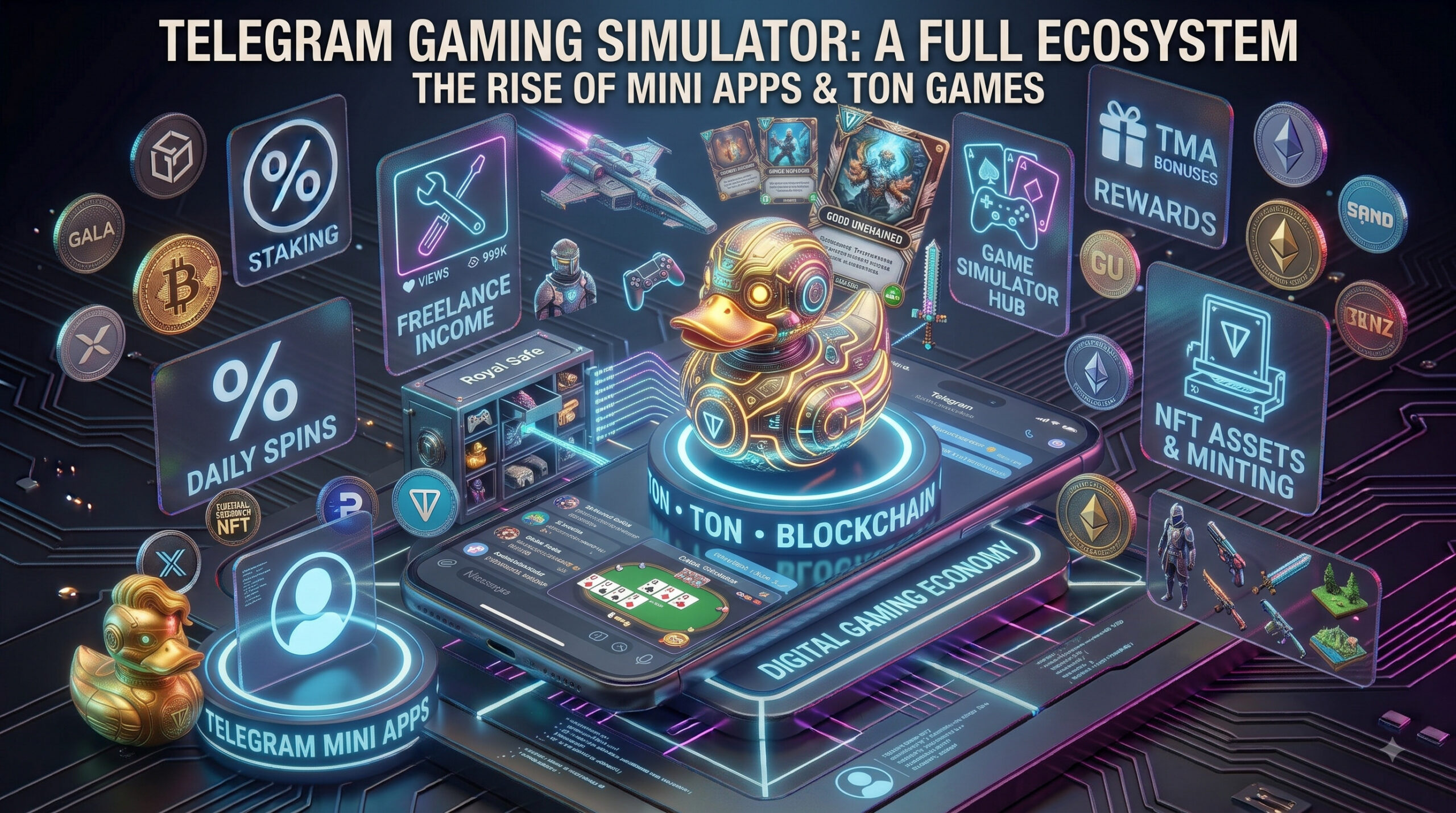
The market for mobile applications that feature monetized gameplay has expanded rapidly, giving players diverse ways to interact with digital ecosystems during their spare time. From casual puzzle games and loyalty platforms to advanced tokenized games running inside messaging apps, users now have dozens of options to explore. However, distinguishing between reliable applications and low-value platforms requires looking closely at how each ecosystem functions, how player time is valued, and what mechanics drive long-term engagement.
This comprehensive guide breaks down the reality behind gaming applications with monetized gameplay. We review eight leading platforms, analyze their core mechanics, and evaluate their strengths and limitations so you can choose the right experience for your preferences.
The Hype vs. Reality
Promotional headlines across social media often present game apps as passive goldmines where anyone can secure substantial returns simply by tapping a screen for a few minutes a day. The reality of the gaming landscape is far more nuanced and structured.
In traditional mobile gaming platforms, reward mechanics operate on advertising revenue sharing or developer user-acquisition budgets. App developers pay networks to bring in active players, and those networks redistribute a portion of their ad proceeds back to users in the form of gift points or platform credits. Accumulating these credits usually takes dozens of hours of repetitive play, and conversion rates are typically modest.
Conversely, modern Web3 gaming ecosystems and tokenized platforms take a structural approach. Instead of relying solely on third-party ad networks, these applications build player-driven digital economies using smart contracts and verifiable asset ownership. In these environments, digital collectibles, community referral structures, and automated staking protocols determine player progression, forming the foundation of the best Web 3 games to play in 2026. Understanding this distinction is essential before choosing where to spend your time.
Duck My Duck

How it works
Duck My Duck is a social Web 3 game and digital collectible simulator built directly on The Open Network (TON) blockchain and accessible natively inside Telegram. The platform requires no separate application downloads, complex installations, or lengthy registration forms, allowing players on iOS, Android, and desktop to launch the game instantly through Telegram chat.
Every new user receives a complimentary starter COMMON digital duck upon launching the application. The primary gameplay loop consists of four interconnected mechanics:
- Feeding: Players feed their digital ducks using in-game corn to collect $DMD tokens directly inside their collectible profile. Feeding cost per tap scales dynamically during active sessions and resets every 8 hours, making short, strategic interactions optimal for progression.
- Breeding: Players can pair two digital ducks to produce eggs with a chance of spawning a new digital duck. Partnering with friends who hold ducks of matching rarity doubles the breeding success rate, creating direct social collaboration within Telegram group chats.
- Merging: Players can combine multiple max-level ducks into higher rarity tiers (COMMON to UNCOMMON, RARE, EPIC, and LEGENDARY). Higher rarity tiers yield exponentially higher $DMD accumulation rates per interaction, with LEGENDARY ducks producing up to 160 times more than COMMON units.
- Staking: Fully leveled ducks (level 5 with full feeding gauges) can be placed into automated staking pools. Staked ducks generate passive $DMD yield continuously around the clock without requiring active screen time, freeing up active slot capacity for new farming cycles.
In addition to farming mechanics, Duck My Duck features an active in-game marketplace where players trade digital ducks using corn or Telegram Stars. Market prices adjust dynamically based on demand trends, with a +15% price adjustment after every purchase and gradual decreases during inactive periods, offering strategic engagement for active marketplace participants.
Key features
- Native Telegram Integration: Operates directly inside chat threads without external app store installations.
- Five Rarity Tiers: Distinct progression scaling across COMMON, UNCOMMON, RARE, EPIC, and LEGENDARY duck collectibles.
- Automated Staking Protocol: Passive yield generation for fully leveled digital assets.
- Social Breeding Mechanics: Direct peer-to-peer breeding links that encourage community cooperation.
- In-Game Marketplace: Dynamic trading environment powered by corn and Telegram Stars.
Pros:
- Zero barrier to entry with a free starter digital duck provided immediately.
- Multi-layered engagement through active feeding, strategic breeding, staking, and marketplace trading.
- High accessibility across mobile and desktop devices via Telegram.
- Transparent asset scarcity and verifiable on-chain digital ownership on the TON network.
Cons:
- Complete platform token dynamics and external exchanges depend on upcoming TGE milestones.
- Marketplace transactions carry a standard 20% platform commission fee.
Solitaire Cube
How it works
Solitaire Cube, developed by Tether Studios and powered by the Skillz tournament platform, turns the classic Klondike Solitaire card game into a head-to-head competitive game. Players are matched against real opponents of similar skill levels who receive the exact same deck deal and timer constraints.
Points are awarded for moving cards to foundation piles, clearing columns, and finishing rounds quickly before the clock runs out. Skillz utilizes a proprietary matching algorithm to evaluate past player performance, ensuring fair competitive tiers. Players can enter free practice matches using virtual currency or participate in entry-fee tournament brackets to compete for leaderboard prizes and gift redemptions.
Pros
- Smooth graphical interface and highly responsive card movement controls.
- Skill-based matchmaking system that minimizes random luck elements.
- Regular daily tournaments and leaderboard challenges for competitive card players.
Cons
- Higher tier competitive brackets require entry fees that carry financial risk for inexperienced players.
- Available tournament features vary significantly depending on local regional regulations.
Swagbucks
How it works
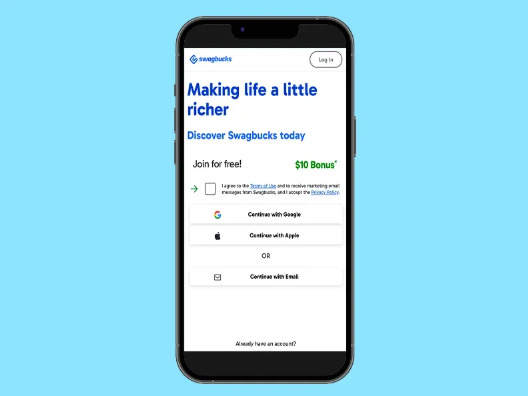
Swagbucks is one of the longest-running online reward platforms, operated by Prodege, LLC. While widely known for web searches and consumer surveys, Swagbucks features a dedicated gaming portal that rewards users for discovering and playing featured third-party mobile games.
To participate, users select a game title from the Swagbucks dashboard, download it via an tracking link, and complete specified milestone goals within a fixed timeframe (such as reaching Level 30 in a city-builder game within 21 days). Upon verifying milestone completion, Swagbucks credits the user’s account with “SB” points, which can be redeemed for electronic gift cards or digital payment options.
Pros
- Established platform history with a broad catalog of participating mobile game titles.
- Flexible payout redemptions including major retailer gift cards and electronic transfers.
- Additional options to accumulate SB points through surveys, web tasks, and shopping portals.
Cons
- Game milestone requirements can be demanding, often requiring hours of daily play to complete within the time limit.
- Tracking errors occasionally occur if tracking permissions or cookies are disabled on mobile devices.
InboxDollars
How it works
InboxDollars operates similarly to Swagbucks under the Prodege network umbrella, but displays earnings in direct currency values rather than abstract point balances. The platform partners with mobile game studios to offer users curated access to casual card games, action titles, and strategy builders.
Users select a game offer from the InboxDollars portal, install the game, and complete specific achievement checkpoints. Each checkpoint awards a fixed dollar credit directly to the user’s account dashboard. Once the account reaches the platform’s minimum payout threshold, funds can be requested via gift cards, prepaid cards, or digital transfers.
Pros
- Transparent balance tracking displayed directly in dollar figures rather than points.
- Variety of lightweight casual game options that require low technical expertise.
- Clear progress tracking for multi-tier milestone offers.
Cons
- Payout thresholds are relatively high for initial withdrawals compared to newer micro-task apps.
- Point accumulation speed slows down significantly after initial new-user promotional bonuses expire.
Cash Giraffe
How it works
Cash Giraffe is an Android-focused gaming app developed by JustPlay GmbH. Unlike platforms that require players to reach complex game levels or high scores, Cash Giraffe measures player time spent inside featured mobile titles.
After installing Cash Giraffe and granting display tracking permissions, users choose games from a recommended list. The app tracks the duration of active gameplay sessions and awards gems for every minute spent inside the partner game. Accumulated gems can subsequently be converted into gift cards or direct digital payouts inside the app’s redemption section.
Pros
- Simple time-based reward mechanics that do not depend on achieving high scores or winning tournaments.
- Low initial withdrawal threshold allowing quick redemptions for new users.
- User-friendly interface with straightforward session tracking.
Cons
- Available exclusively on Android devices, leaving iOS users without access.
- The rate of gem rewards per minute decreases progressively as total playtime in a single game title increases.
PlaytestCloud
How it works
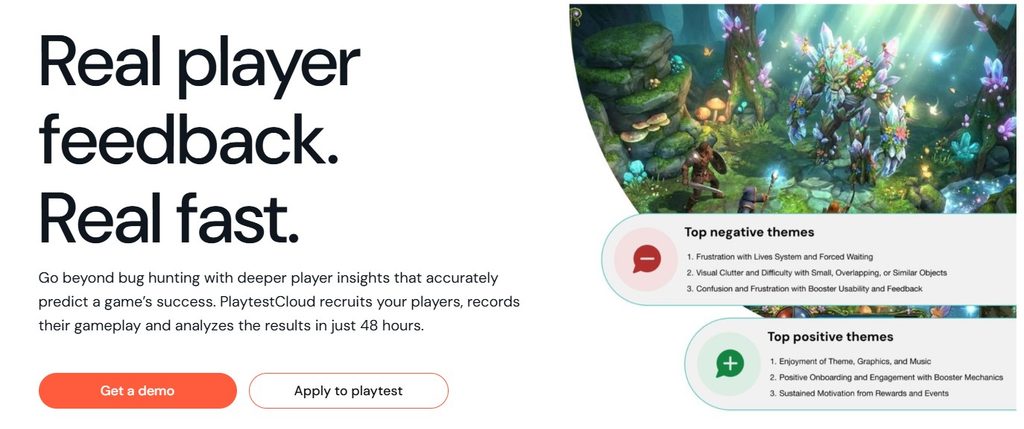
PlaytestCloud is a specialized usability testing platform that connects game developers with playtesters around the world. Instead of operating as a casual rewarding game, PlaytestCloud serves as an evaluation hub for unreleased or prototype mobile games.
When selected for a playtest session based on demographic profiles, players download a test build of the mobile game and record their screen and voice while playing for 10 to 15 minutes. Testers speak their thoughts aloud, describing user interface clarity, game feel, and potential bugs. After submitting the recorded session and completing a short feedback questionnaire, PlaytestCloud reviews the submission and processes payment per test session.
Pros
- High reward rate per active testing session relative to standard casual game apps.
- Opportunity to test unreleased mobile games and provide direct feedback to game developers.
- Professional management with prompt payouts per completed test video.
Cons
- Test availability is irregular and depends heavily on specific developer target demographics.
- Requires screen and audio recording in a quiet environment, which may not suit casual background play.
TestingTime

How it works
TestingTime is a Swiss-based user research agency that conducts detailed user experience studies for digital products, web applications, and mobile games. While similar to traditional testing platforms, TestingTime focuses on extended, high-touch feedback sessions.
Participants sign up as testers and receive invitations to scheduled user tests based on target profile criteria. Sessions typically last between 30 and 60 minutes and often involve live video calls with a user experience researcher. Testers interact with game prototypes or digital platforms, complete assigned tasks, and provide real-time verbal feedback. Payments are processed directly after the study session is validated by the researcher.
Pros
- Significantly higher payout per session compared to automated tap games.
- Engaging testing format that involves direct communication with professional research teams.
- Global accessibility with remote testing options across desktop and mobile.
Cons
- Requires strict scheduling commitments and live attendance at scheduled test times.
- Low volume of game-specific tests compared to general web application and usability studies.
Game Tester GG
How it works
Game Tester GG is a dedicated playtesting community platform operated under Lionbridge. Designed for gaming enthusiasts across PC, console, and mobile platforms, it allows players to participate in structured playtest campaigns, bug hunts, and feedback surveys.
Upon creating a profile and detailing hardware specifications and gaming preferences, players receive campaign invites matching their profile. Testers complete specific gameplay tasks, report graphical or functional bugs, and complete feedback surveys. Participation awards platform GTX points, which can be accumulated and redeemed for digital store keys, gaming hardware discounts, or digital payouts.
Pros
- Diverse game testing opportunities across multiple platforms beyond mobile devices.
- Structured feedback system that appeals to dedicated core gamers interested in quality assurance.
- Community-focused hub with regular testing assignments.
Cons
- Complex point structures requiring clear understanding of conversion ratios for redemptions.
- Earning potential varies depending on hardware setup and geographical selection criteria.
How Reward-Based Gaming Apps Work
Understanding the underlying mechanics of monetized gameplay platforms helps players select apps that match their personal gaming habits and goals. Most apps fall into three primary operational categories:
Loyalty and reward apps
Loyalty-focused applications partner with game studios to drive user acquisition. Studios pay the application host to acquire active users, and the host shares a portion of that revenue with players in exchange for installing games and reaching specific level milestones or active playtime quotas. Examples include Swagbucks, InboxDollars, and Cash Giraffe.
Competition and skill-based apps
Skill-based tournament apps allow players to compete in head-to-head matches or multi-player leaderboard brackets. Outcome success depends on player reflexes, strategic execution, and deck knowledge rather than time spent watching advertisements. Players often pay entry credits or fees to join competitive pools, with top performers claiming the prize distribution. Solitaire Cube exemplifies this category.
Digital collectible and tokenized game networks
Modern Web 3 game architectures build self-contained digital ecosystems using decentralized ledger infrastructure like the TON network. Players interact with verifiable on-chain assets, participate in social breeding loops, and stake high-tier collectibles to accrue community tokens. Duck My Duck leads this category by integrating social mechanics, automated staking, and tokenized game loops directly into messaging platforms.
Are These Gaming Apps Legit?
Yes, the apps detailed in this guide are legitimate platforms operated by registered companies with established user bases. However, “legitimate” should not be confused with “high income.”
When evaluating any gaming application, keep the following realistic standards in mind:
- Business Model Clarity: Transparent platforms clearly explain where their rewards originate, whether from developer ad spend, research budgets, or tokenized ecosystem treasuries.
- Realistic Time Investment: Casual reward apps are designed as light entertainment side activities. They will not replace full-time work or generate substantial wealth.
- No Upfront Capital Requirements: Genuine rewarding games and Web 3 platforms provide free access paths or free starter assets without demanding compulsory deposits to begin playing.
- Verifiable Withdrawal Terms: Reliable platforms state minimum redemption thresholds and processing timelines clearly before you start playing.
Pros and Cons of Reward-Based Gaming
Pros
- Flexible Entertainment: Earn secondary perks and gift credits during normal downtime or commuting hours.
- Discover New Titles: Broaden your gaming horizons by discovering indie games, strategy titles, and Web 3 platforms you might not otherwise encounter.
- True Digital Ownership: Modern tokenized games allow you to hold verifiable, self-custodial digital collectibles in your personal wallet profile.
- Community Engagement: Platforms like Duck My Duck connect players through cooperative breeding, social chat links, and community leaderboards.
Cons
- Time-Intensive Progression: Accumulating significant point balances on traditional ad-reward apps requires long hours of repetitive play.
- Declining Yield Rates: Time-tracking apps often reduce reward production rates per minute as total time spent on a single game title increases.
- Variable Test Qualifications: Usability platforms like PlaytestCloud and TestingTime offer limited session invites based on narrow demographic requirements.
Final Takeaway
Navigating the landscape of game apps with monetized gameplay comes down to choosing the platform model that aligns best with your goals. If you enjoy testing unreleased software and providing structured feedback, platforms like PlaytestCloud and TestingTime offer rewarding session-based opportunities. If you prefer classic mobile card games and competitive brackets, skill-based platforms like Solitaire Cube provide engaging tournament play.
For players seeking a modern, accessible, and social experience, Duck My Duck represents a standout choice in 2026. By combining casual feeding and breeding mechanics with verifiable TON digital asset ownership, automated staking, and seamless Telegram chat integration, Duck My Duck delivers an innovative Play-to-Yield experience with zero friction and true community engagement.